Friday, 14 December 2012

The Horrific Psychology - Interview With Mike Battista

There’s always been one question that’s got me wondering. Today, I am on a journey of discovery to seek the answer! Ever since I was young I’ve paid significant attention to the horror genre of cinema. It’s left me wondering: why do we scream at every little unpredictable moment on the big screen? To help me uncover the psychology, and understand the theory of which I call “The Horrific Psychology’ is Mike Battista, a graduate, and writer with a PhD in Personality Psychology, as well as the author of many titles including; Does Anyone Really Like Horror Movies? – Personality & Automatic Reactions To Frightening Films, and Thinking About Polar Bears.

At first glance, horror titles are considered to be scary because of what we see on the surface; the blood, guts, and gore. However it’s better to move away from the thought of; what makes a horror title scary? Yet, remind yourself of fear being an emotional characteristic of oneself. Fear is within us along with a collection of other emotions that seem to be countless! It is because we see ‘fear’ as an emotion that we, as an audience, portray such a natural reaction to what we see on the big screen. It’s almost as if we react without realising it. Battista believes that evolution is what it’s all about. A natural reaction is provoked, depending on the atmosphere, that surrounds us.
“A lot of it is natural. Evolution has shaped us to automatically be scared of potentially dangerous things like the dark, blood, and strange creatures. We are built to be tense when there is an unknown danger lurking nearby, then jump when it finally pops out. Horror movies capitalize on these natural tendencies, exaggerating the dangers or drawing out the suspense to cause us fear even though the danger isn’t real.” He says.
It’ll be a natural instinct to associate ‘fear’ with the visuals on screen – the blood, guts, and gore. This is where a jump scare can be most effective, because as an audience, the first thing we see is the visuals. In my experience, and I’m sure I’m not alone when I say this, if I experience a jump scare, I don’t always remember the storyline. All my energy goes towards that one incident that made me scared in the first place.
Battista explains the ideology of behind true terror. He says; “I think real terror–the more subtle fear that Stephen King calls “the finest emotion”–requires a little more depth of story and character. The most terrifying horror has layers of meaning, and that meaning requires knowing who is experiencing the terror and how they got there.”   

There’s one thing that directors / producers alike have in common. It’s in their best interest to attract audiences, as they intend to bring forward every single emotion that is within u. Fear, excitement, anxiety, courage as well as others; but fear being the most important characteristics to bring centre stage. How is this even possible? A solid storyline; pure and simple! Once there’s a storyline in place, the connection between the audience and the characters on screen start to evolve, as if by magic! This connection opens the door to endless possibilities. Audiences begin to feel sympathy for on screen, for people who are actually non-existent. Watching the story unfold is strengthening the connection between the audience and movie characters. There’s almost this sense of urgency to find a solution to the situation the on screen character is in. As an audience, you feel like you’re in it together. The more you watch, the more it feels like you’re doing everything you can to make sure that character is safe! It’s like you’ve been taken out of your comfort zone (behind the big screen) and sucked into the situation.
My curiosity got the better of me. I asked the one thing that maybe on everybody’s minds. What are the three main denotations / connotations in the horror genre which encourage fear? The answer to this question leads to a doorway that encourages one to think outside the box. Instead of focusing on the ‘in your face’ facts about the horror genre and how fear emerges, we are invited to take the magnifying glass, and look closer, analyse it, and understand it. When you’re sitting in front of a big screen, with a bucket of popcorn and a cold drink sitting comfortably in its cup holder to your side, the lights fade into pitch black darkness, you find yourself automatically drawn to the big screen. The scene is set, and your atmosphere is adjusted. It’s when the adjustments are in place; that these three elements come into play very easily. These are as follows, just as Michael Battista suggested.

  • Exaggeration. Because horror is only on a screen, it has to exaggerate to have any effect. Real knives are pretty dull (hah), but in horror movies they make metallic swishy noises every time they move, they sparkle even in the dark, and they’re accompanied by discordant violin music. Horror kicks everything up a notch so you feel unsafe even when you’re sitting comfortably in a movie theatre munching on popcorn.
  • Expectation. Horror, perhaps more than other genres, relies on our previous experience of horror. Everyone knows that slowly building music is going to end in a jump scare. They know that the bad guy lying on the floor isn’t actually dead yet. Good horror movies use this expectation to add tension. Great horror movies know when to break from expectation to take it even further.
  • Extrapolation. (I probably could’ve used a different word, but I liked the three “ex” words. What I mean by this is that a lot of horror is in the viewer’s mind. Low lighting, claustrophobic camera angles, fast cuts…they all obscure what is actually going on, so we the viewers have to fill in the details ourselves. Half of horror is in our own heads.
“The following is based on a true story!” How many times have we seen this sentence on a black screen, most of us are left with an eerie feeling, and the movie hasn’t even passed the one minute mark. Horror movies that are based on true stories seem to have a powerful and deeper impact on the individual. The possibility of experiencing similar encounters to what you see on the big screen, suddenly the impossible becomes possible! Highly educated, as well as a research analyst at present. Mike Battista is dedicated to uncovering the secrets of the horror genre, as if it was ‘The Blair Witch Project’ reincarnated and agrees that horror movies that are based on a true story carry entirely different weight on one’s shoulders.
“…It’s another method of closing the psychological gap between knowing it’s only images on a screen and being frightened by it anyway. Knowing it could happen in reality drives that primordial voice in your head that says it could happen to you.”
Do movie lovers go to the movies because they enjoy being scared? Just how crazy is this question? it’s crazy enough for anyone to think outside the box, and reach the end of a horror movie with a sense of relief.


“One theory of horror enjoyment states that people do not actually enjoy the horror part of horror movies. It’s genuinely unpleasant for them. But then the relief that comes at the end (e.g., the good guys overcome the horror, or at least the movie ends), and that is what people actually “enjoy.” Some people “enjoy” being able to hold their girlfriend’s hand and act brave throughout the horror. Does that count as enjoying being scared? It’s enjoying the movie when you look at the big picture, but I’m not sure it counts as enjoying the fear itself.”


Let's make this article a little personal. I asked horror enthusiast Mike Battista to name three favourite horror movies of all time. His were as follows, although his choices may vary on a regular basis just like everyone else;

  • The Exorcist
  • The Descent
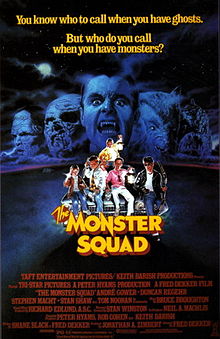
  • Monster Squad
My horror favourites are;
  • The Exorcist
  • The Amityvile Horror
  • Paranormal Activity series
There are so many to choose from. You’re spoilt for choice!

The 32nd US President Franklin D. Roosevelt once said; “There’s nothing to fear but fear itself!” Ladies and gentlemen, I think we have just uncovered ‘The Horrific Psychology!”


Sunday, 4 November 2012

Words From The Streets - Interview With Tony Thorne


Slang is created with the use of informal words and expressions, which are not expected to be part of a standard dialect or language. It’s used in different contexts, including SMS messaging, social networking sites, and spoken communication.
Has slang changed in London since the early part of the 20th century?
Tony Thorne, a linguist, and slang specialist at King’s College London, and author of ‘The Latest Youth Slang’ says, “some slang words (called ‘vogue terms’) depend on their newness for effect, so go out of date very quickly, but some slang (the word ‘punk’ lasted from the 17th to 20th century) stays in the language for a long time. I don’t think the concept of slang will be forgotten, even if the words themselves change”.
Street slang has become part of our culture, but have you ever wondered where it came from? Well, it might surprise you to know, that street slang first emerged in the 16th century, in London’s Docks, when soldiers and seamen used it to communicate. But the language wasn’t popularised until the 18th century, when pick-pocketers used it to communicate with each other secretly.
By the 19th century, market traders took on cockney rhyming slang, introducing words like ‘bread and honey’ (meaning money) or chewy toffee (meaning coffee).
A slang term which has changed its meaning is “bimbo”. Today, it’s used to describe an attractive blonde woman, who’s not so smart. However, in the 1920s, bimbo actually meant tough guy.
Here’s a term which comes from the 1930s, ‘Honey cooler’.  No, it doesn’t mean keeping a jar of honey cool in the fridge it actually meant a kiss.
Similarly, if someone said “look at you, all ginned up,” you might consider it as an insult. Labelling you as an alcoholic, in the 1940s, the meaning of this term was dressed up.
Fast forward to the 1950s with ‘cloud 9’, a term meaning ecstatic; this is a common expression, “I’m on cloud 9”. It’s a term, which is sometimes still used today.
The 1960s was a ‘bummed out era, when many people used this expression to let others know when they’re depressed. “I’m so bummed out man! Wish life wasn’t so difficult”. The 1970s was full of bunny girls, no, not the playboy kind. Back than, ‘bunny’ meant a beautiful girl. “She’s such a bunny!”
The 1980s, the era when the slang term ‘bangin’ didn’t just come out of nowhere, and invade our vocabulary. It was a term that was often used by working class teens, which meant amazing and cool. Today, this term still holds the same meaning; “That club was bangin!”
British hip-hop wasn’t mainstream until the 1980s, when London Pose, Derek B, Rodney P, and the Demon Boyz, hit the studio. They were four of the most influential artists of British hip-hop. They all had one thing in common; all of them were born and bred in London. Each one of them paved the way for UK rappers in the mainstream today.
Whitney Folks, 24 years old and working in the media industry says,
“Hip-hop music and TV have influenced slang greatly. I personally think it’s American music and television that has the influence, from the way the talk and use their western slang, its new and interesting for everyone who hears so we use it in our language”.
Alongside these 80s legends, was Tim Westwood, now a BBC radio DJ. Westwood bought UK hip-hop to the mainstream, by hosting a show called Night Network in the late 80s. With Night Network, he pointed out early hip-hop culture in London, and broadcasted up and coming UK rappers.
Seona Scott, a freelance journalist says:
“A lot of the media effects how we speak like, with hip-hop they use certain words to describe money, the word ‘skriller’ or ‘squart’ used to describe money, and now I’m hearing a lot of young people say, “awww I need to get my skriller, I need to get my squart”. So it does kind of, have an influence”.
Artists like Miss Dynamite, N-Dubz, and Dizzie Rascal have since followed in the footsteps of these rappers, who bought UK hip-hop to life all those years ago. In the song, ‘Miss Dy-na-mi-tee,’ she says,
“Use 2 spend my time blazin’ (smoking weed) lazin’ days away.”
And Dizzie Rascal in his song, ‘Where’s The G’s’ says,
“All I see is bare poop on TV.”
In many ways, this article has proven that US/UK hip-hop is responsible for the development of slang. For example, artists like Snoop Dogg, who made terms like ‘Fo’ shizzle mah neezle’ (for sure, my homie!) popular in the US.
Rebecca Morris, a Media teacher at a Sixth Form College says,
“I think they have an influence – although this is an American influence, and lots of teenagers are very influenced by all things American.”
She believes hip-hop and R&B music is where slang is most heard, and teenage fans will try their best to emulate what they hear.
Fast-forward to today, and some of the same terms are still used, like ‘blazin’ and bare’. However, language changes everyday. New terms emerge from every corner, and what’s cool today, may not be cool tomorrow.
“We are much more tolerant of different identities, different ways of behaving today…We also tend nowadays to look for new fads, fashions to celebrate, so the media, for example, happily features new language rather than trying to avoid, criticise or censor it” says Tony Thorne.
Language has a tendency to change, this transformation most likely occurs, when there’s a lack of equality due to the geographical separation and social obstacles. London has a deep and complicated relationship with slang. Different dialects dominate particular areas of London. For example, cockney rhyming slang is associated with East London, in the same way you probably associate street and urban slang with the north side. 
London is a big cosmopolitan city, its population is made up of people from all over the world. Putting this into consideration, language is more likely to change, and make an impact on individuals.

“Slang is very creative, it uses all the techniques of poetry, so there’s nothing essentially wrong with it…Slang has its place in our culture and our language, just like ‘posh’ language, legal language”
Do you think hip-hop music and TV influence slang?
“Yes, but they don’t usually create slang, just spread it from the street or the club where it originated to other potential users in other places. They also help to give it glamour and seeming importance,” says Thorne.
According to The Guardian in 2010, over 200 schools in England, failed to meet the GCSE target. Only 35% of students, were able to achieve five GCSEs at A*-C grade including English. Could slang be responsible for this outcome? Back in 2010, studies in Canada prove students who spend time on social networking sites, like Facebook/Twitter fail their English exams. Almost 35% of students, at Waterloo University in Canada, fail to achieve the minimum requirements.
Seona is indecisive when asked; do you think slang ruins the English language? – Will it ever be forgotten?
“Yes and no, for ruining the English language because, a lot of people are becoming lazy, especially when it comes to texting, and some people do the short format” she says.
An English teacher at St Marylebone School in Westminster, Jonathan Goldstein says “…I’ve got no problems with slang at all…certainly in spoken language.” He continues, by emphasising the essentiality, of children knowing how to use formal and written English. They speak slang among themselves all the time, they speak slang to me from time to time.”
The characteristics of people, who use slang, are best described as an individual, who likes to follow trends, and also at the same time be a trendsetter.
Teens and young adults are often associated with using slang. It’s defined, as a secret code, a way for people to communicate spontaneously with little anxiety, that someone uninvited is eavesdropping.
If a term is frequently used, ‘rinsed out’ and spread to a larger community, it’s no longer considered to be slang.
Whitney Folks uses slang regularly, however, she does restrict herself to using it, especially when it comes to her line of profession as a Media Assistant.
“When I see adults use slang, I do find it quite weird…if an un-cool person uses slang or adults who are meant to talk properly, uses slang it’s kind of sad. It’s like they are trying to be cool” says Whitney.
The 24-year-old goes onto say, people who aren’t meant to use slang, look as if they’re trying too hard; which never looks too good.
25-year-old Seona Scott, uses slang regularly; however, she makes it clear, that she only uses slang with her friends. “it’s just you know…it’s ours” she says. Seona returns back to formal English when she’s around her parents, and others.
“When I hear my parents, say one or two slang words it makes me laugh, but then its like, they kind of understand where I’m coming from…It’s just a bit cringey” says Seona.
What’s next for slang?
“Almost impossible to predict, recently the big trend in the UK is for ethnic terms (first black, then Asian) to mix in with English slang to produce ‘multiethnic youth vernacular’ – some say it’s a new dialect which may influence or oust standard English in coming years” says Tony Thorne.
What’s the moral of this story? Well, to put it in a few words, be prepared for change, you can be hit with a new slang term at anytime, or even a completely new type of slang, which explains why it’s so creative and different.
OK, now its time to wrap up this slang extravaganza. Here are five slang terms of 2012:
            Swag (style/flavor/cool) still a UK / US favorite and staying strong for this year “I have Swag for days.”
             ‘Dench’ – Awesome/cool “That’s Dench man!”
            ‘Yolo’ – self-explanatory and abbreviated as “You Only Live Once!”
            ‘Leggoo’ – Leave “Nothing left to do here, leggoo!
             ‘Gassed’ Excited “I’m so gassed about tomorrow!”

Friday, 26 October 2012

The Truth About Love Is Finally Revealed: P!nk The Truth About Love

The truth about love remained untold until now! The diva of soft rock/pop P!nk released her version of true love on September 18 of this year. The Truth About Love introduces nineteen tracks that demonstrate Cupid the love doctor’s theory on the magical existence we call love.  Her opening track, Are We What We Are, seems to challenge the conventional stereotype of an individual who’s either head over heels in love, or completely the opposite. The song is designed to cry out for help, whilst sitting in a comfortable chair losing yourself in the music, while P!nk plays the role of an agony aunt.
Are We All We Are describes the different characteristics every individual can hold, as well as suggesting how every one of us are able to be a different influence whilst in a relationship. The Truth About Love is a canvas of experiences, a roller-coaster ride of emotions. The album exposes levels of intensity that relate to love. A variety of themes are explored, for example, the paradox of a love/hate relationship, which is detailed in the the song True Love. This newly released album has something for everyone. Fun and funky songs to hit the club like Blow Me – One Last Kiss and Here Comes The Weekend, which includes a not-so-surprising collaboration with Eminem.
P!nk reveals herself as a lady who’s definitely in touch with her feelings, as she gives us an emotional ride with Is This Thing On?, Run, and a few others that follow. Her latest album encourages (as well as reflects) a split personality of one’s characteristics – especially someone who’s head over heels in love. It’s almost as if the singer is describing the notion of being torn, wanting and not wanting, an I love him/I love him not situation.
Although this combination creates a powerful outcome, it isn’t quite enough, as it seems as though there is a cry for help. Her struggles and experiences are  something millions of people all over the world can relate to. In my opinion, it’s the first time (since her previous album Funhouse) that the voice of an independent woman has once again tried to speak with Is This Thing On?, Beam Me Up and Try. However, spirits are still held high. She reminisces on the Good Old Days, and still looks for the beat; the question is, is P!nk listening, and looking for the beat of her heart with Where Did The Beat Go? Let’s not fail to mention the reference of being a mother to Willow, and her going on to express how much her life has changed in five years, since her last album release in 2008. Is it time to face The Truth About Love? To overcome your struggles, emotions, fears and experiences and come out of it not only as a better, stronger person, but also feeling better about yourself.